Portraits of Wickedness Part 1: There’s a Type for Everyone
by Subomi Plumptre

After I wrote my article about my Bathsheba-sized sin, I wanted to journal about one of the greatest redemption tales ever told—the story of Judah.
But before that, I took a turn to look at the various portraits of wickedness in the Bible.
My conclusion is that no one is exempt from wickedness. You have a type based on your personality. Some kinds are loud; others are quiet and insidious. However, no one is too far gone for redemption. There is nobody that cannot repent and be restored by the undeserved mercy of Christ.
In fact, God will stop at nothing to save you. He will keep chasing, correcting, and teaching you until you come home. He never gives up.
So, here are some of the wickedness archetypes that I found in scripture:
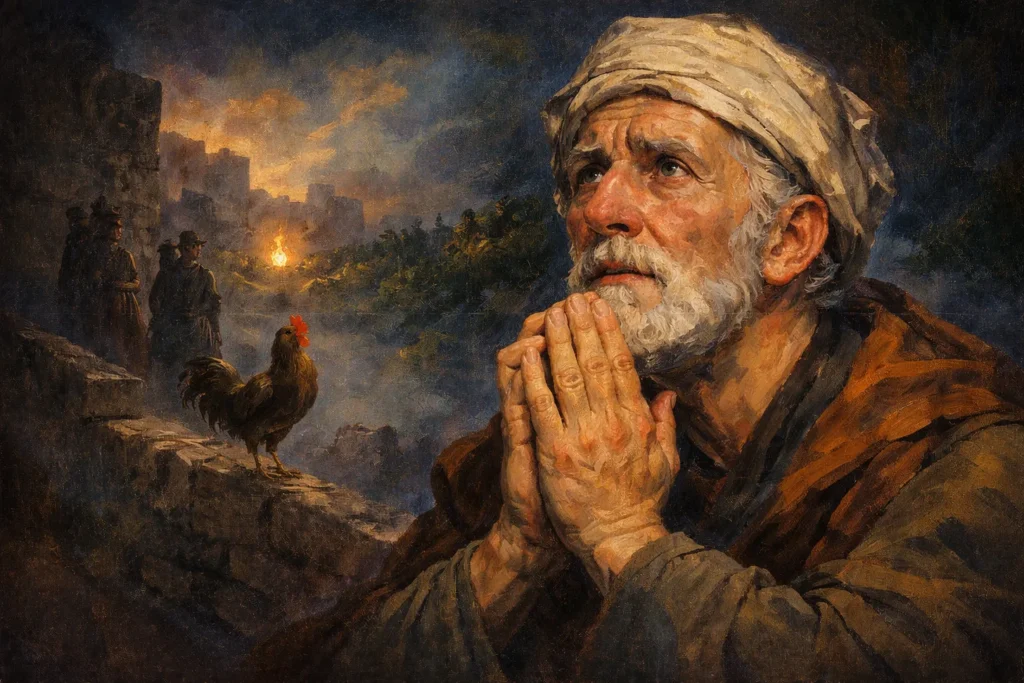
Fear-Driven Wickedness – Peter
Peter was one of Jesus’ closest followers. Hours before the Saviour’s death, he promised loyalty. When Jesus was arrested, fear overtook conviction, and Peter threw Jesus under the bus.
“Meanwhile, Peter was sitting outside in the courtyard. A servant girl came over and said to him, ‘You were one of those with Jesus the Galilean.’ But Peter denied it in front of everyone. ‘I don’t know what you’re talking about,’ he said.
Later, out by the gate, another servant girl noticed him and said to those standing around, ‘This man was with Jesus of Nazareth.’ Again, Peter denied it, this time with an oath. ‘I don’t even know the man,’ he said.
Peter swore, ‘A curse on me if I’m lying—I don’t know the man (Jesus)!’ And immediately the rooster crowed. Suddenly, Jesus’ words flashed through Peter’s mind: ‘Before the rooster crows, you will deny three times that you even know me.’ And he went away, weeping bitterly.” Matthew 26:69–75 NLT
Performative Wickedness—Ananias
In the early days of the church, generosity was widespread. Believers sold property and laid the proceeds at the apostles’ feet. Ananias and his wife, Sapphira wanted the reputation of sacrificial devotion without bearing the full cost. So, they sold a piece of land but secretly kept part of the money while presenting the remainder as though it were the full amount. This lie led to death.
“Then Peter said, “Ananias, why have you let Satan fill your heart? You lied to the Holy Spirit, and you kept some of the money for yourself. The property was yours to sell or not sell, as you wished. And after selling it, the money was also yours to give away. How could you do a thing like this? You weren’t lying to us but to God!”
As soon as Ananias heard these words, he fell to the floor and died. Everyone who heard about it was terrified. 6 Then some young men got up, wrapped him in a sheet, and took him out and buried him.” Acts 5:3-6 NLT
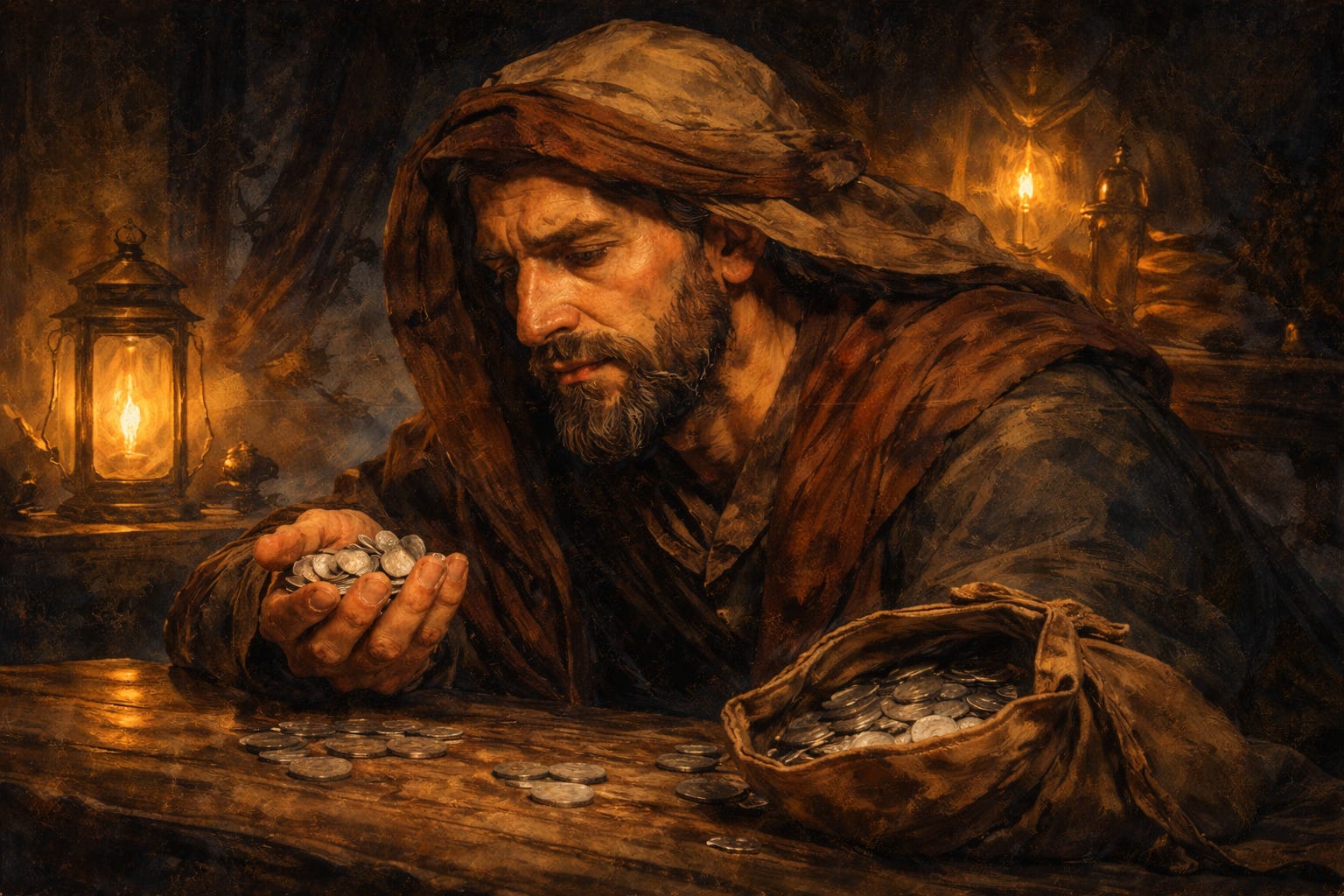
Strategic and Monetised Wickedness – Judah
The patriarch, Jacob, had many sons. Nine brothers conspired to kill Joseph because of envy – he was dad’s favourite. One, Reuben, attempted to save him.
It was Judah who came up with the brilliant idea to sell Joseph, and to insulate himself from possible murder charges while doing so.
“Judah said to his brothers, ‘What will we gain by killing our brother? We’d have to cover up the crime. Instead of hurting him, let’s sell him to those Ishmaelite traders. After all, he is our brother—our flesh and blood!’ And his brothers agreed.” Genesis 37:26–27 NLT
Reminds you of Judas doesn’t he?
After this, Judah’s first son, Er, marries Tamar and dies for his own wickedness. Maybe Judah specialised in raising wickedness in his home.
Tamar was then given to the second son, Onan, who also died for wickedness. Judah, though legally bound to give her his third son so she could have children and security, strategically lied and delayed, fearful that the last son would also die.
Eventually, Tamar disguised herself as a prostitute and waylaid Judah. Judah paid for her services and she became pregnant in order to preserve this same Judah’s lineage.
“Tamar was aware that Shelah had grown up, but no arrangements had been made for her to come and marry him. So she changed out of her widow’s clothing and covered herself with a veil to disguise herself. Then she sat beside the road at the entrance to the village of Enaim, which is on the road to Timnah.
Judah noticed her and thought she was a prostitute, since she had covered her face. So he stopped and propositioned her. ‘Let me have sex with you,’ he said, not realising that she was his own daughter-in-law.
‘How much will you pay to have sex with me?’ Tamar asked.
‘I’ll send you a young goat from my flock,’ Judah promised.
‘But what will you give me to guarantee that you will send the goat?’ she asked.
‘What kind of guarantee do you want?’ he replied.
She answered, ‘Leave me your identification seal and its cord and the walking stick you are carrying.’ So Judah gave them to her.
About three months later, Judah was told, ‘Tamar, your daughter-in-law, has acted like a prostitute. And now, because of this, she’s pregnant.’ ‘Bring her out, and let her be burned!’ Judah demanded. But as they were taking her out to kill her, she sent this message to her father-in-law: ‘The man who owns these things made me pregnant. Look closely. Whose seal and cord and walking stick are these?’
Judah recognised them immediately and said, ‘She is more righteous than I am, because I didn’t arrange for her to marry my son Shelah.’ And Judah never slept with Tamar again.” Genesis 38:14–26 NLT
Irritable Wickedness – Elisha
Elisha was a prophet who seemed to have anger and self-image issues. Here’s what happened:
“Elisha left Jericho and went up to Bethel. As he was walking along the road, a group of boys from the town began mocking and making fun of him. ‘Go away, baldy!’ they chanted. ‘Go away, baldy!’
Elisha turned around and looked at them, and he cursed them in the name of the Lord. Then two bears came out of the woods and mauled forty-two of them.” 2 Kings 2:23–24 NLT
Instead of rebuking a group of children kindly or self-deprecatingly, he chose murder instead. Clap for yourself.
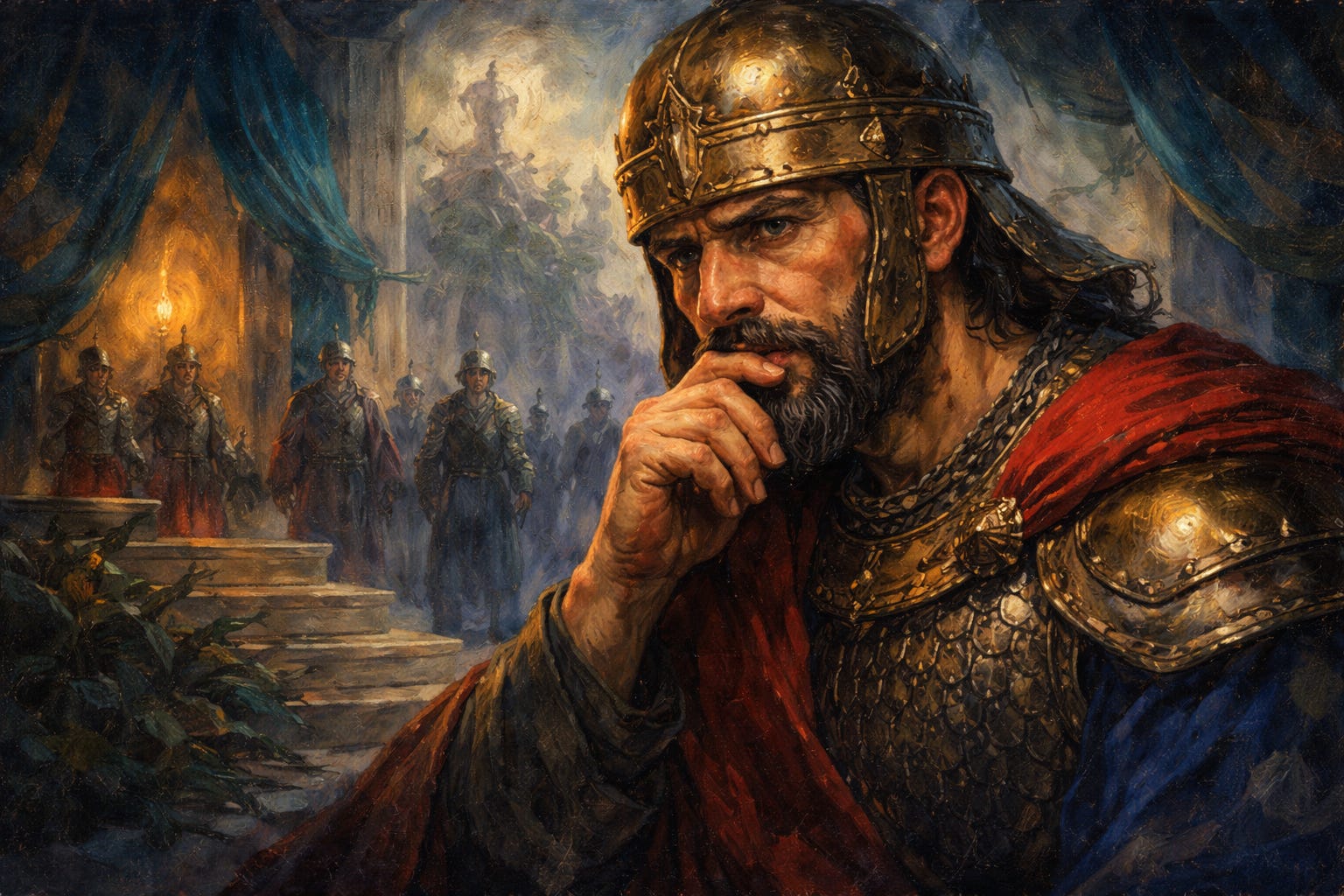
Insecure, Image-Preserving Wickedness – Saul
Saul was Israel’s first king. Over time, his fear of people became more decisive than his fear of God. When commanded to completely destroy the Amalekites, Saul obeyed selectively, sparing King Agag and keeping the best livestock.
When confronted, he insisted he had obeyed the Lord and reframed his disobedience as worship.
Even after being exposed, Saul’s concern was not repentance but reputation. He pleaded with Samuel to honour him publicly before the people, revealing a heart more interested in appearance than obedience.
“Saul captured Agag, the Amalekite king, but completely destroyed everyone else. Saul and his men spared Agag and kept the best of the sheep and goats, the cattle, the fat calves, and the lambs. Everything, in fact, that appealed to them. They destroyed only what was worthless or of poor quality.
Then the Lord said to Samuel, ‘I am sorry that I ever made Saul king, for he has not been loyal to me and has refused to obey my command.’ Samuel was so deeply moved when he heard this that he cried out to the Lord all night.
The next morning Samuel went to find Saul. Someone told him, ‘Saul went to the town of Carmel to set up a monument to himself; then he went on to Gilgal.’
When Samuel finally found him, Saul greeted him cheerfully. ‘May the Lord bless you,’ he said. ‘I have carried out the Lord’s command!’
‘Then what is all the bleating of sheep and goats and the lowing of cattle I hear?’ Samuel demanded.
‘It’s true that the army spared the best of the sheep, goats, and cattle,’ Saul admitted. ‘But they are going to sacrifice them to the Lord your God. We have destroyed everything else.’
Then Saul pleaded again, ‘I know I have sinned. But please, at least honor me before the elders of my people and before Israel by going back with me so that I may worship the Lord your God.’” 1 Samuel 15:8–30 NLT
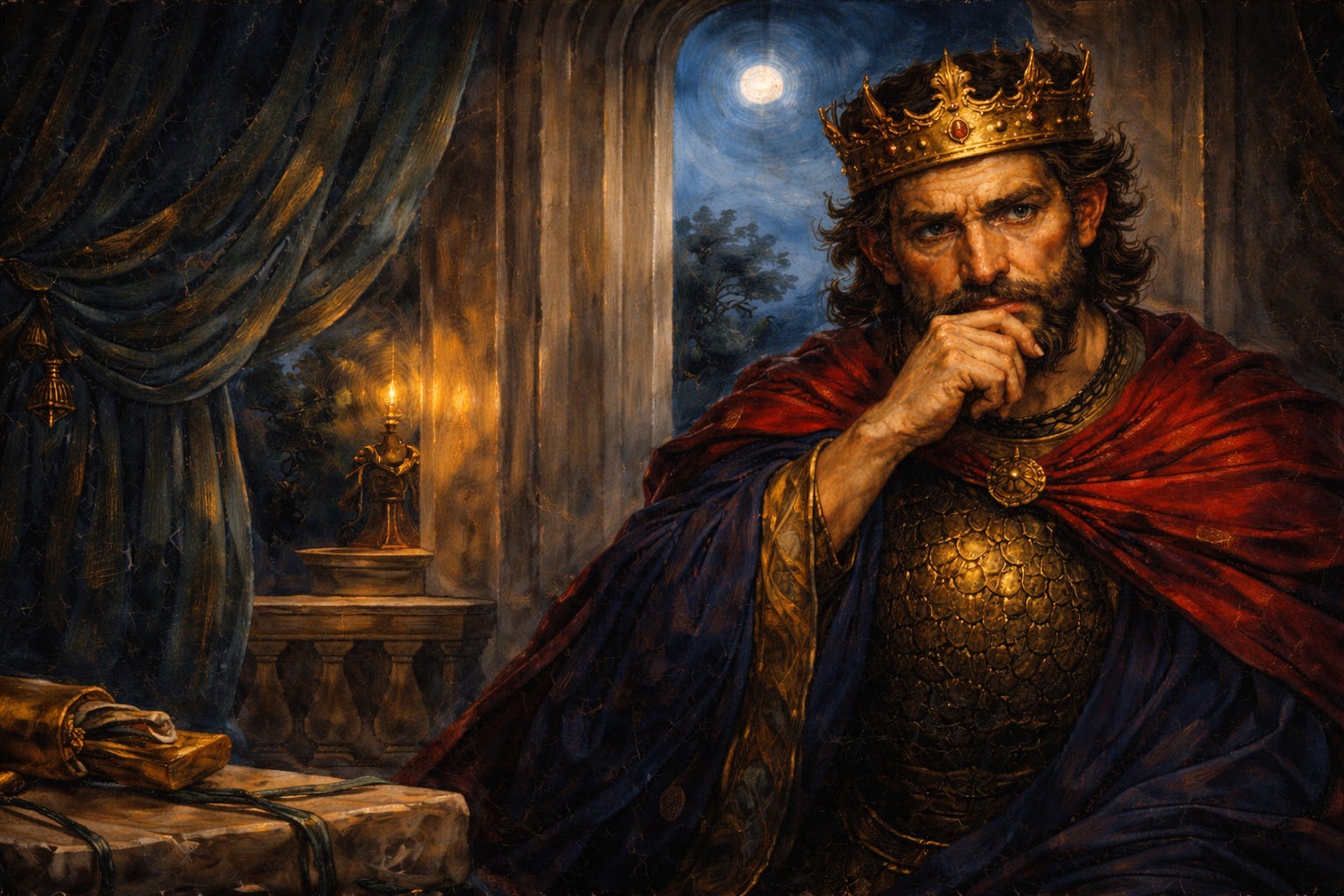
Multi-Dimensional & Multi-Generational Wickedness – Joseph and David
Joseph
Joseph did not appear to have healed from his years of servitude in Egypt. As prime minister (following his ascension from prison), he had agency and wisdom.
However, when a famine became severe, he sold grain for all the livestock and land in Egypt and then enslaved the Egyptians too. A starving man has little choice, and Joseph took advantage of that.
Any wonder then that decades later, these same Egyptians would enslave his own people. Checkmate, suckers.
“Meanwhile, the famine became so severe that all the food was used up, and people were starving throughout the lands of Egypt and Canaan.
By selling grain to the people, Joseph eventually collected all the money in Egypt and Canaan, and he put the money in Pharaoh’s treasury.
When the people of Egypt and Canaan ran out of money, all the Egyptians came to Joseph. ‘Our money is gone!’ they cried. ‘But please give us food, or we will die before your very eyes!’
Joseph replied, ‘Since your money is gone, bring me your livestock. I will give you food in exchange for your livestock.’
So they brought their livestock to Joseph in exchange for food. In exchange for their horses, flocks of sheep and goats, herds of cattle, and donkeys, Joseph provided them with food for another year.
But that year ended, and the next year they came again and said, ‘We cannot hide the truth from you, my lord. Our money is gone, and all our livestock and cattle are yours. We have nothing left to give but our bodies and our land.
Why should we die before your very eyes? Buy us and our land in exchange for food; we offer our land and ourselves as slaves for Pharaoh. Just give us grain so we may live and not die, and so the land does not become empty and desolate.’
So Joseph bought all the land of Egypt for Pharaoh. All the Egyptians sold him their fields because the famine was so severe, and soon all the land belonged to Pharaoh.
As for the people, he made them all slaves, from one end of Egypt to the other.” Genesis 47:13–21 NLT
David and Bathsheba
David committed adultery and impregnated another man’s wife. As if that wasn’t enough, he conspired with his army general to place the unwitting husband on the front lines so he could be killed. This left the road open for David to marry the woman. Sheer wickedness.
“Late one afternoon, after his midday rest, David got out of bed and was walking on the roof of the palace. As he looked out over the city, he noticed a woman of unusual beauty taking a bath. He sent someone to find out who she was, and he was told, ‘She is Bathsheba, the daughter of Eliam and the wife of Uriah the Hittite.’ Then David sent messengers to get her; and when she came to the palace, he slept with her.
Later, when Bathsheba discovered that she was pregnant, she sent David a message, saying, ‘I’m pregnant.’
Then David sent word to Joab: ‘Send me Uriah the Hittite.’ So Joab sent him to David. When Uriah arrived, David asked him how Joab and the army were getting along and how the war was progressing. Then he told Uriah, ‘Go on home and relax.’ David even sent a gift to Uriah after he had left the palace.
But Uriah didn’t go home. He slept that night at the palace entrance with the king’s palace guard. When David heard that Uriah had not gone home, he summoned him and asked, ‘What’s the matter? Why didn’t you go home last night after being away for so long?’
Uriah replied, ‘The Ark and the armies of Israel and Judah are living in tents, and Joab and my master’s men are camping in the open fields. How could I go home to wine and dine and sleep with my wife? I swear that I would never do such a thing.’
‘Well, stay here today,’ David told him, ‘and tomorrow you may return to the army.’ So Uriah stayed in Jerusalem that day and the next. Then David invited him to dinner and got him drunk. But even then, he couldn’t get Uriah to go home to his wife. Again he slept at the palace entrance with the king’s palace guard.
So the next morning David wrote a letter to Joab and gave it to Uriah to deliver. The letter instructed Joab, ‘Station Uriah on the front lines where the battle is fiercest. Then pull back so that he will be killed.’” 2 Samuel 11:2–15 NLT
Unforgiving Wickedness – David
David was on the run from Absalom, his son, who had staged a rebellion and seized the throne. Stripped of power and fleeing Jerusalem, David encountered Shimei, a relative of Saul, who publicly cursed him, accused him of bloodshed, and humiliated him as he passed.
In the moment, David restrains his men from retaliating and frames the abuse as something the Lord may have permitted.
Years later, however, when David is old and nearing death, this same restraint does not translate into forgiveness.
As he prepares Solomon to take the throne, David revisits old grudges. Among his final instructions is a directive concerning Shimei. Though David had sworn not to kill him at the time, he transfers the responsibility to Solomon, ensuring that vengeance is ultimately carried out.
‘And remember Shimei son of Gera, who cursed me with a terrible curse as I was fleeing to Mahanaim. When he came down to meet me at the Jordan River, I swore by the Lord that I would not kill him. But do not consider him innocent. You are a wise man, and you will know what to do to him. Bring his gray head down to the grave with blood.’” — 2 Samuel 16:5–13; 1 Kings 2:8–9 NLT
To be continued…